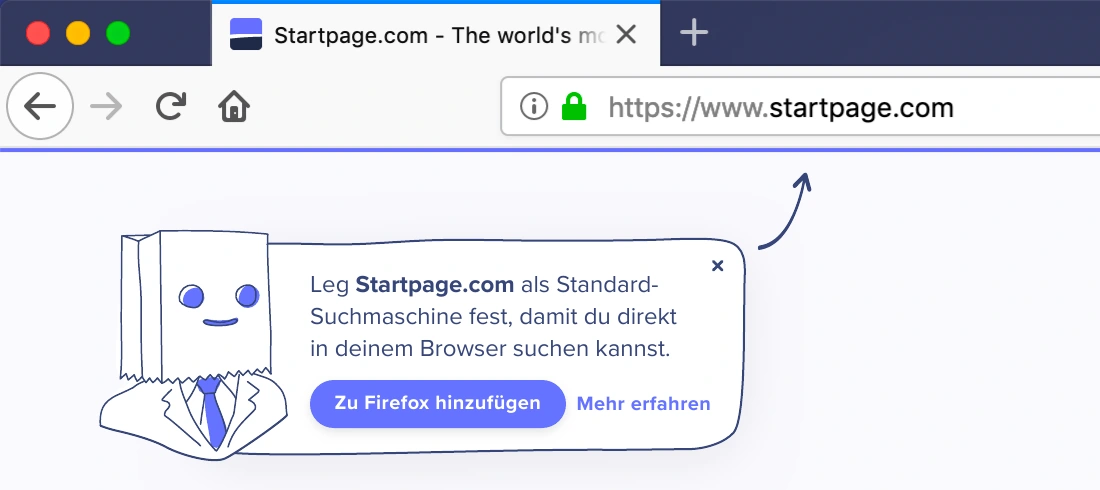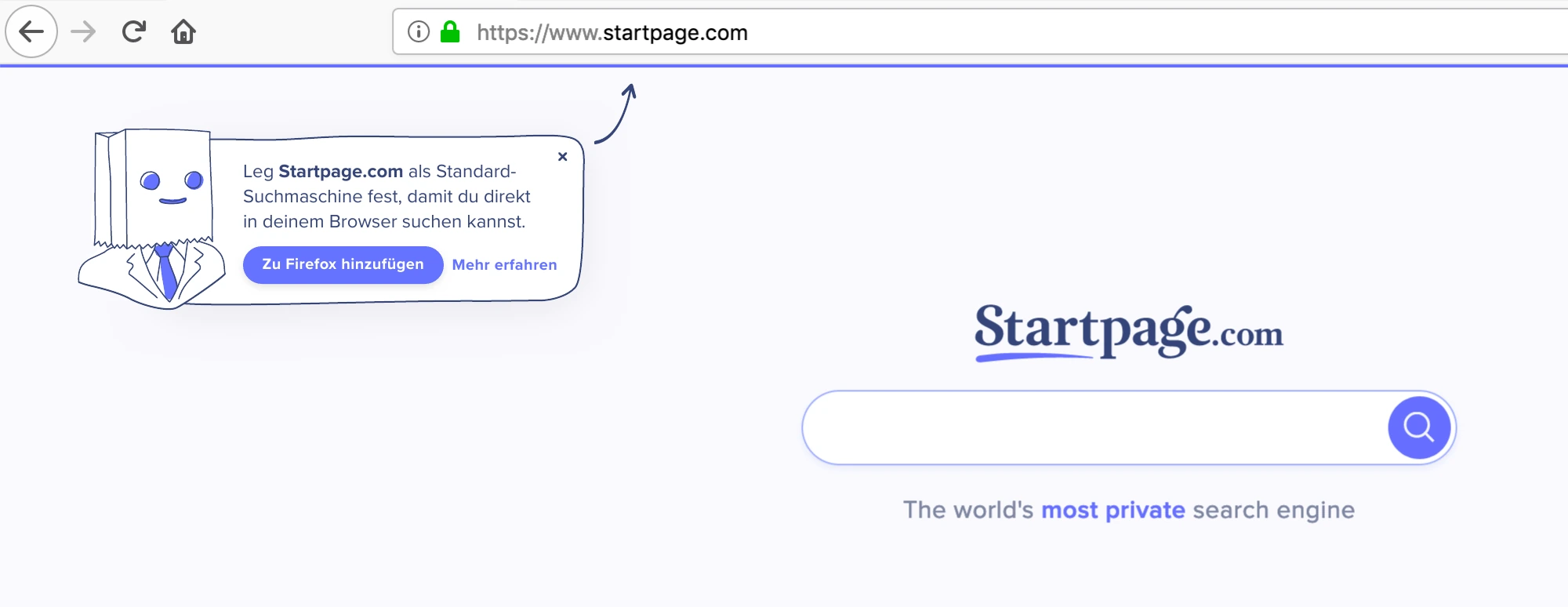
Co-create, then test
I was tasked with the challenge of how to get people to keep using Startpage and keep coming back. I decided to use a design sprint: start from the question, explore many ideas as a team, then narrow them down to the strongest one, tested with users within two weeks.
A user-tested flow for installing a Firefox add-on that makes Startpage the default search engine for searches typed in the address bar.
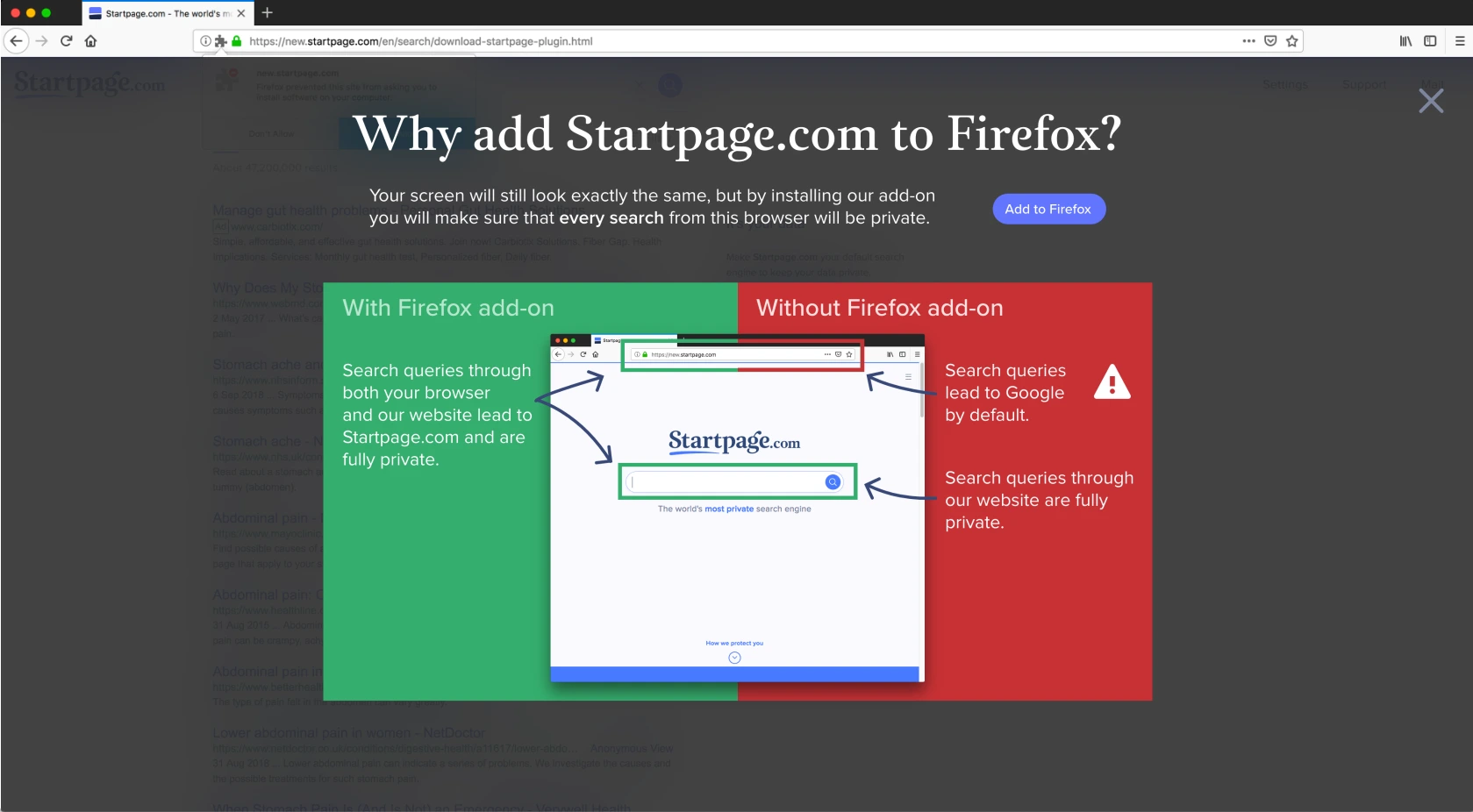
- Everyone found the install flow easy.
- Everyone’s first instinct was to look somewhere else: 4 of 5 went to their browser settings, and 2 said they’d next expect it on the homepage or in Startpage’s settings.
- Everyone noticed the prompt, but it distracted them from their search, and the copy made them unsure what it would do.
- 2 people said they liked the arrow pointing to the address bar.
- Everyone noticed the title on the Learn more page, and 3 of 5 understood the copy.
A second sprint to fix what failed and retest with users.
Fix what failed
I decided to run a shorter, modified design sprint to iterate on the design, adding the Head of Marketing, since the copy and the trust signals were marketing questions as much as design ones.
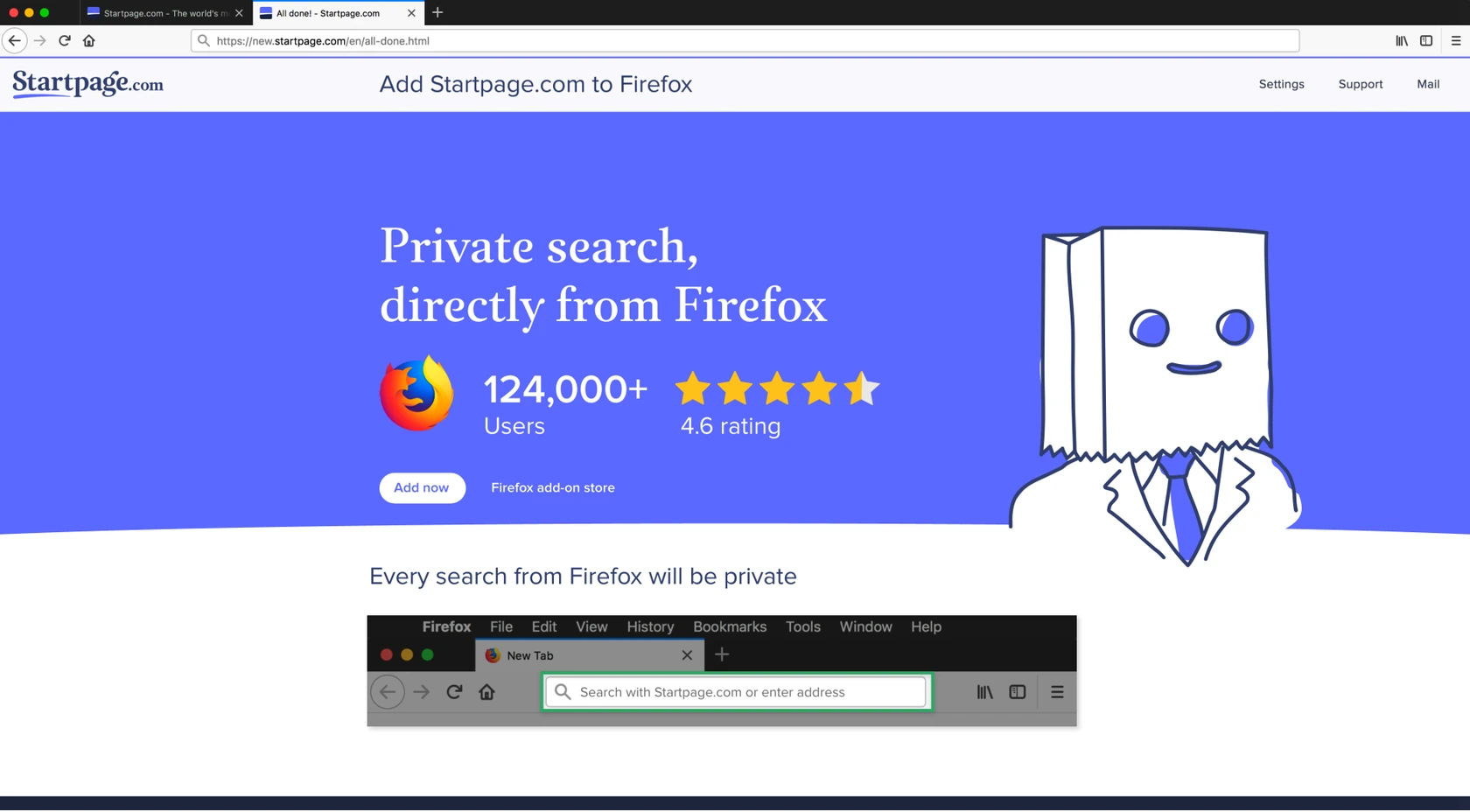
An updated, user-tested install flow:
- starting on the homepage, where people expected it
- with clearer copy about what the add-on does
- with the Firefox logo, user count and ratings to signal trust
- and simpler install and Learn more pages
- Asked to install the add-on, people still went to their browser or computer settings first, a dead end, since Startpage couldn’t be added there.
- Most ignored the pop-up, taking it for an ad (banner blindness).
- The Firefox logo, ratings and user count added confusion about what they were installing.
An updated design of the prompt based on the key insights, leaving the rest of the flow intact, as it had worked well in user testing.
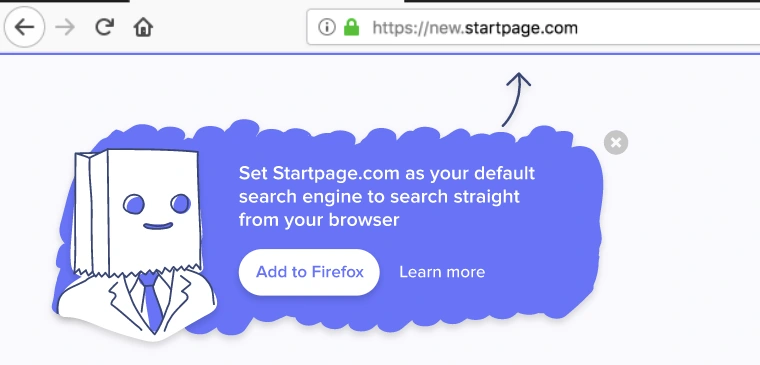
From doubt to launch
Before shipping, the CEO had doubts about the pop-up’s look and its copy. I’d written the copy as UX copy, telling people what the prompt is and what they can do. The CEO wondered whether listing Startpage’s benefits, in a more marketing style, would work better. Opinions alone couldn’t settle it.
- A final prompt visual from an external brand designer, which the CEO felt was more on brand
- An A/B test of the UX copy against marketing copy
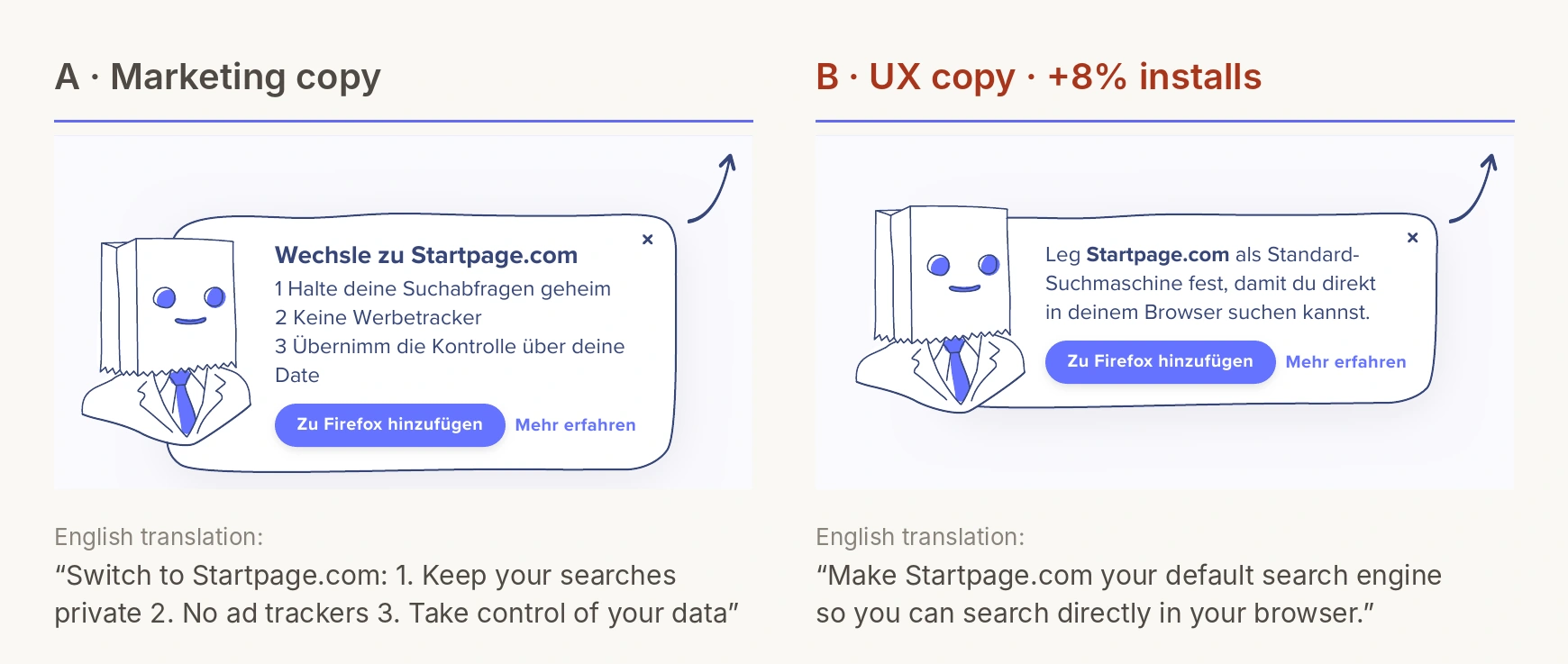
- Across nearly a million views, the UX copy won, with 8% more installs, settling the uncertainty
- The engineering team built and shipped it
- It worked well enough that Startpage built the add-on for Chrome too